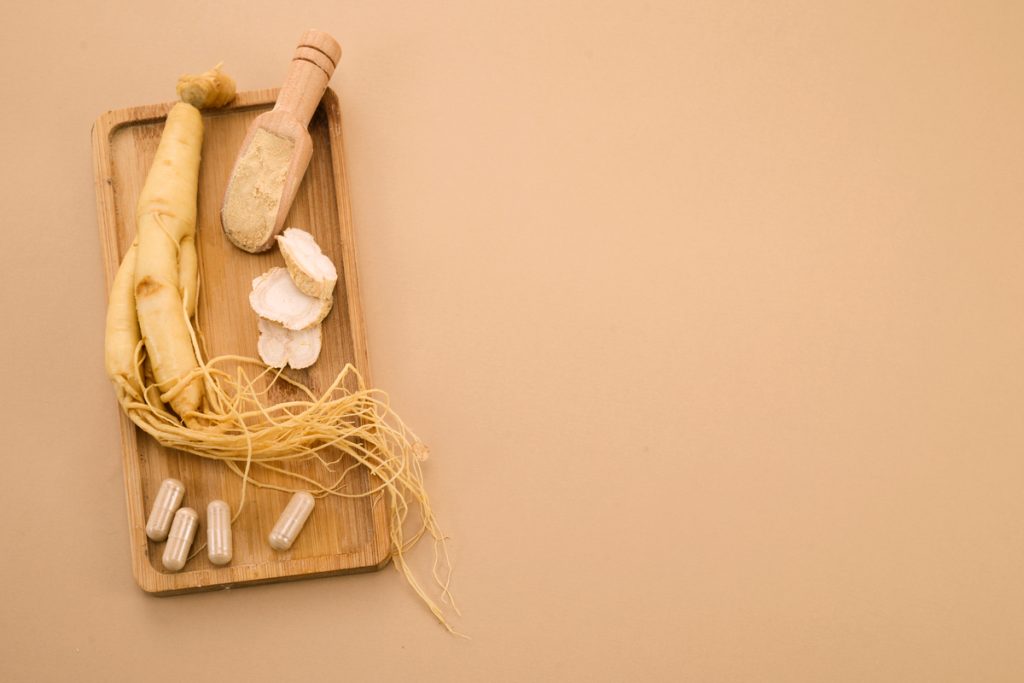
How to Choose the Right Pueraria Mirifica Grade: The 2026 Quality Guide
As Pueraria Mirifica (PM) cements its status as a staple in natural hormone support, consumers in 2026 face a new challenge: transparency.
With so many “White Kwao Krua” products on the shelves, how do you know which one actually contains the active miroestrol needed for results? Choosing the wrong grade isn’t just a waste of money—it can mean the difference between seeing a “miracle” transformation and seeing no change at all. Here is how to navigate the grades of PM like an expert.
1. Understand the Hierarchy of PM Grades
In the world of Thai botanicals, there are three primary “tiers” of quality. Understanding these is the first step in your journey.
Grade A: Standardized Extract (The Gold Standard)
This is the most potent form. Instead of just grinding the root, manufacturers use advanced solvent extraction to isolate the active phytoestrogens.
- Look for: Labels specifying Puerarin levels (e.g., $0.09\%$ to $2\%$) or Miroestrol content.
- Best for: Menopause relief, breast enhancement, and systemic health.
Grade B: Pure Root Powder
This is simply the dried and pulverized tuber. While “natural,” the concentration of active compounds varies wildly based on harvest conditions.
- Look for: “100% Pure Root” or “Traditional Grade.”
- Best for: Mild wellness support or DIY topical masks.
Grade C: The “Kwao Krua” Blends
Be wary of vague products. There are Red (Butea superba) and Black varieties used for entirely different purposes.
Avoid: Vague labels that don’t confirm the botanical name Pueraria Mirifica.
2. The “Age” Factor: Why 3-5 Years is the Sweet Spot
In 2026, premium cultivators emphasize the age of the harvest. A Pueraria Mirifica tuber needs at least 3 to 5 years to accumulate a therapeutic level of miroestrol.
Pro Tip: If a brand mentions “mature harvest” or “aged tubers,” it’s a sign of higher quality. Younger roots are cheaper to produce but far less effective.
3. Extract vs. Powder: The Potency Gap
Many people make the mistake of comparing milligrams (mg) directly between a powder and an extract. The difference in concentration is massive.
The Math: A 10:1 extract means that 10kg of raw root were used to create just 1kg of concentrated powder. Therefore:
$100\text{mg}$ (Standardized Extract) $>$ $500\text{mg}$ (Raw Root Powder)
4. Checklist: What to Look for on the Label
Before you hit “buy” in 2026, ensure the product meets these four criteria:
- Botanical Name: Must state Pueraria Mirifica.
- Origin: Authentic PM is native to Thailand. Look for Thai FDA certification.
- Standardization: Look for a percentage of Puerarin or Isoflavones.
- Third-Party Testing: Ensure it is tested for heavy metals and purity.
Summary of Benefits by Grade
| Feature | Standardized Extract | Raw Root Powder |
|---|---|---|
| Bioavailability | High (Easy absorption) | Low to Moderate |
| Consistency | Guaranteed active levels | Varies by batch |
| Typical Use | Clinical symptom relief | General tonic |