The Geographic Roots of Traditional Thai Medicine
Thailand’s diverse landscapes have long shaped its rich healing traditions. Consequently, understanding herbal wellness across Thailand regions requires examining how microclimates, soil conditions, and cultural influences defined local botanical remedies.
Moreover, indigenous healers adapted their medicinal preparations to the natural flora of their immediate environments. Therefore, traditional Thai medicine evolved not as a single monolithic practice, but as a harmonious collection of four distinct regional traditions.
A Regional Breakdown of Thai Botanical Traditions
In addition to climate variations, regional culinary and lifestyle habits heavily influenced how communities utilized native herbs:
1. Northern Thailand (Lanna): Rejuvenation and Mountain Forest Botanicals
First, the cool, mountainous forests of Northern Thailand naturally produced rich restorative roots. Indigenous healers favored potent age-defying plants such as Pueraria Mirifica and Butea Superba to promote hormone balance, skin elasticity, and physical longevity.
2. Northeastern Thailand (Isan): Hardiness and Forest Foraging
Second, the arid plateau of Isan required resilient flora capable of thriving in harsh conditions. Healers relied on wild roots, bitter tonics, and forest herbs designed to boost digestion, endurance, and physical stamina for heavy agricultural labor.
3. Central Thailand: Royal Court Medicine and Standardized Formulations
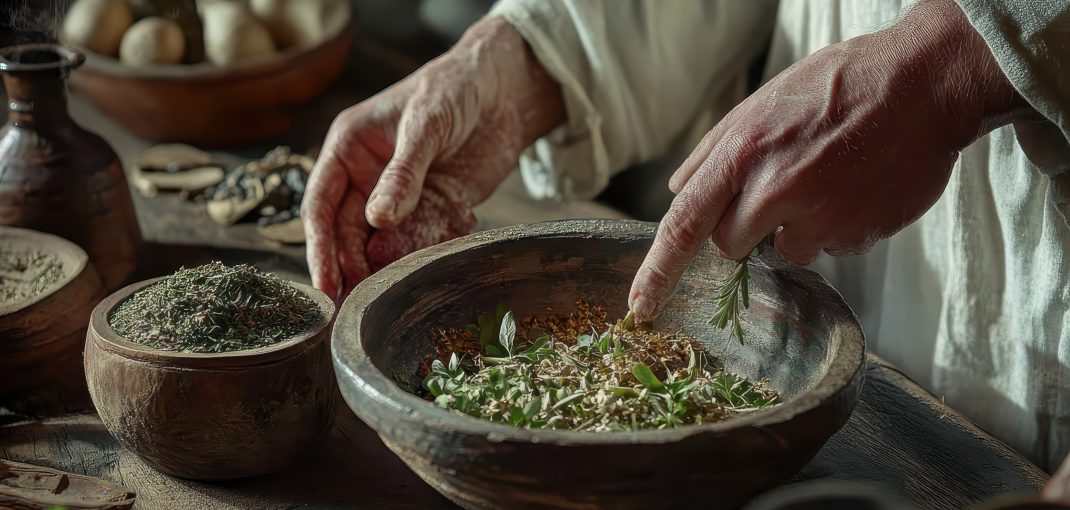
Third, the fertile river basins of Central Thailand became the hub of formal royal medicine. Traditional doctors combined regional herbs into balanced, multi-ingredient formulas designed to harmonize the body’s four physical elements (earth, water, wind, and fire).
4. Southern Thailand: Coastal Spices and Warming Remedies
Finally, the tropical, humid coastal climate of the south fostered a tradition rich in warming spices. Communities heavily utilized turmeric, ginger, and aromatic roots to improve circulation, combat humidity-related ailments, and preserve joint mobility.
Cultural Connection: While Northern Thailand provided legendary longevity roots like White Kwao Krua, Central courts standardized these remedies into structured medical texts that survive today.
Bridging Regional Wisdom with Modern Extraction
Furthermore, contemporary herbal science honors these ancient regional distinctions while raising safety and potency standards:
- Sustainably Sourced Botanicals: Modern processing selects wild-harvested herbs from their authentic native provinces to guarantee ideal phytochemical density.
- Standardized Active Ingredients: In addition, laboratory extraction isolates active compounds like miroestrol and flavonoids to deliver reliable doses.
- Full-Spectrum Bioavailability: Similarly, modern science validates that traditional multi-herb pairings enhance digestive absorption.
Embracing the Diversity of Authentic Thai Healing
As modern research continues to study regional remedies, the value of Thailand’s diverse botanical heritage becomes increasingly clear. Ultimately, incorporating standardized regional herbs into your daily routine provides a time-tested, natural approach to holistic longevity.
Experience Authentic Thai Herbal Heritage
Explore 100% pure, laboratory-tested Pueraria Mirifica, Butea Superba, and premium Thai botanical remedies from Pueraria Thai.
Explore Our ShopFrequently Asked Questions
Northern Thailand, particularly the high-altitude forest regions, is the traditional native habitat for high-potency Pueraria Mirifica roots.
Geography determined plant availability; northern mountain forests yielded dense rejuvenation roots, while humid southern coastal zones favored warming spices.
Yes, high-quality modern supplements use laboratory extractions to standardize active compounds while removing raw soil impurities.